Research
Research and projects
Looking for a project? See Join the lab, or get in touch with an idea of your own.
Our projects range from national citizen science to studies of single species, and many are designed with the fishers and managers who will use the results. Student projects sit alongside the funded work, and often grow out of it.
Student projects
Placeholder photo: Bee, CC BY 4.0, via iNaturalist
- Degree
- PhD, from 2026
- Supervision
- Co-supervised by Barrett Wolfe
- Thesis
- What makes a fish vulnerable? Linking stress physiology, behaviour and angling in an iconic species
PhD · from 2026
What makes a fish vulnerable?
Some fish are more likely to be caught than others. This PhD links stress physiology and behaviour to angling in an iconic recreational species, to understand what makes individual fish vulnerable and what that means for how the fishery is managed.
Placeholder photo: Julien Savoie, CC BY 4.0, via iNaturalist
- Degree
- PhD, from 2022
- Supervision
- Co-supervised by Barrett Wolfe
- Thesis
- Integrating movement and physiological data to assess bycatch mortality of deep-sea skate Bathyraja irrasa in demersal longline fisheries
PhD · from 2022
Bycatch mortality of deep-sea skate
Skates are a common bycatch in demersal longline fisheries. This PhD combines movement and physiological data to assess how many deep-sea skate (Bathyraja irrasa) survive capture, and what that means for fishery management.
Placeholder photo: 陳德範 (Chen De-Fan), CC BY 4.0, via iNaturalist
- Student
- Christina Muller-Karanassos, PhD 2022–2026
- Supervision
- Co-supervised by Barrett Wolfe
PhD · completed 2026
Longface emperor fisheries in Palau
Christina assessed the status of the longface emperor (Lethrinus olivaceus), a commercially important reef fish, to inform coral reef fisheries management in Palau.
Placeholder photo: Sula Vanderplank, CC BY 4.0, via iNaturalist
- Student
- Jennifer Owen, 2025
- Species
- Striped marlin, Kajikia audax
Student project · 2025
Striped marlin species distribution models
Striped marlin are a prized recreational catch off eastern Australia and New Zealand, and their availability varies from year to year with ocean conditions. This project builds species distribution models linking striped marlin records to the environment, to map suitable habitat through the seasons and across years.
Placeholder photo: Hugh Chan, CC BY 4.0, via iNaturalist
- Students
- Two student projects, 2023 and 2024
- Related
- Small Pelagic Fishery assessment reports (Ward et al. 2025)
Student projects · 2023, 2024
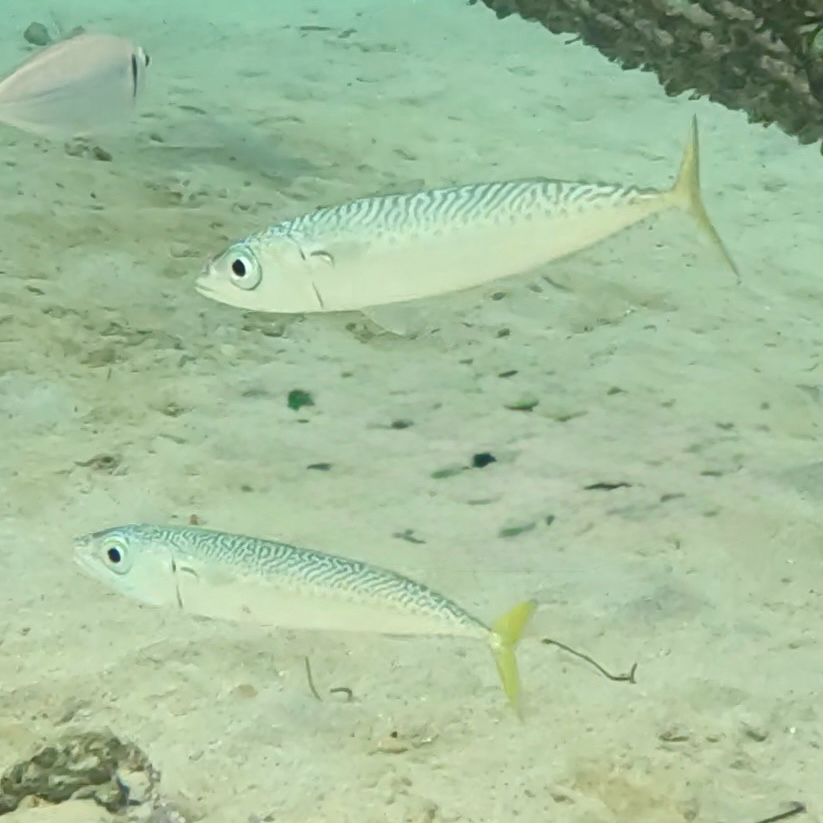
Blue mackerel age and growth
Blue mackerel (Scomber australasicus) are one of the main species taken in Australia’s Small Pelagic Fishery. Reliable estimates of age and growth show how productive the stock is and how it may respond to fishing.
Lab projects
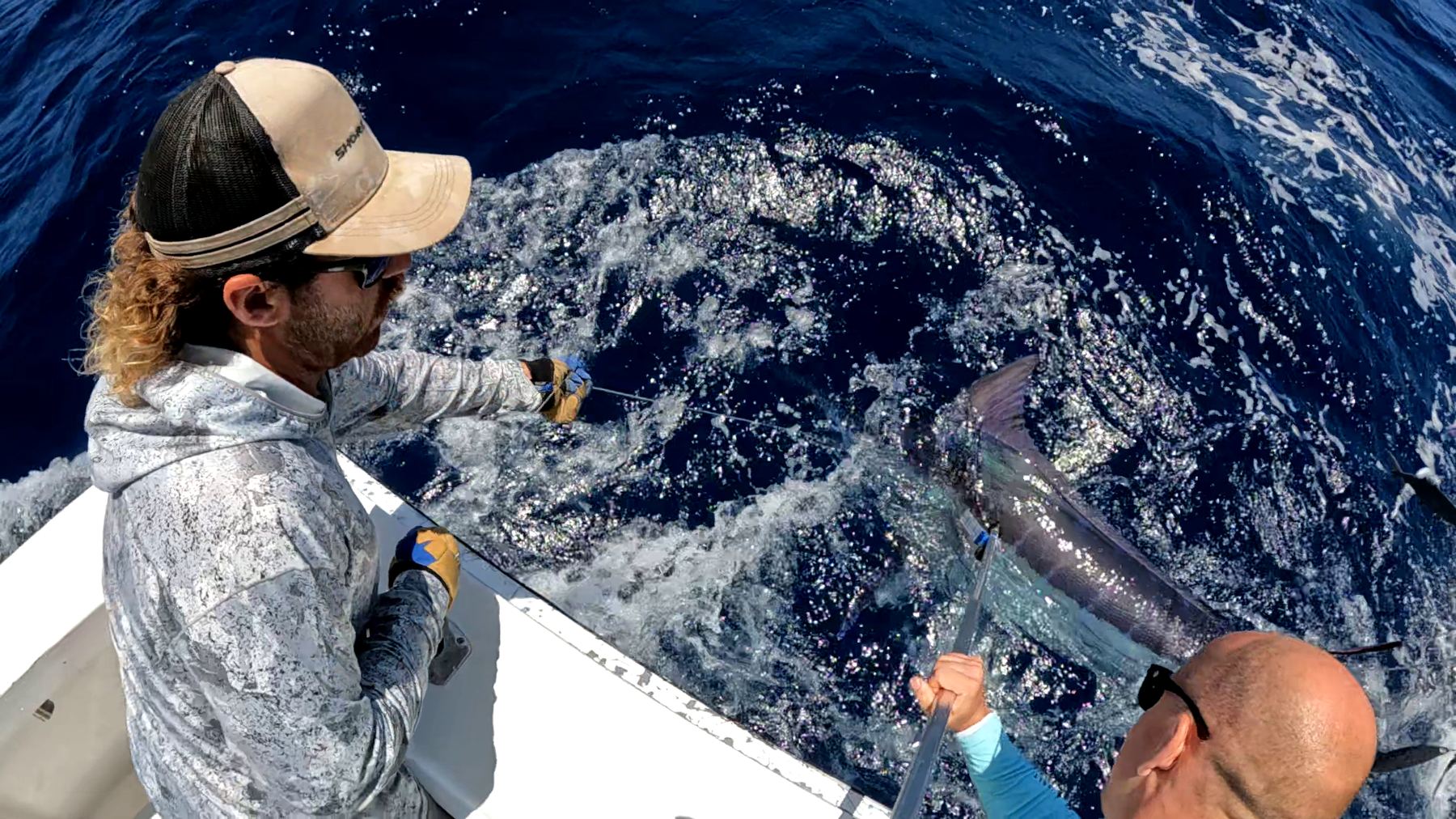
Bringing a marlin alongside for release.
- Funding
- Fisheries Research and Development Corporation, 2023–2025
- Species
- Billfishes and tropical tunas, including striped marlin and yellowfin tuna
- Output
- Final report [link when published]
Principal investigator · FRDC 2022-173
Recreational catch data for tropical tunas and billfishes
Recreational catches of tunas and billfishes are recorded in club records, charter logbooks, tournaments, tagging programs and surveys, but rarely in a form that stock assessments can use directly. We standardised catch rates from each source, compared what each can detect, and set out a framework for monitoring from here.
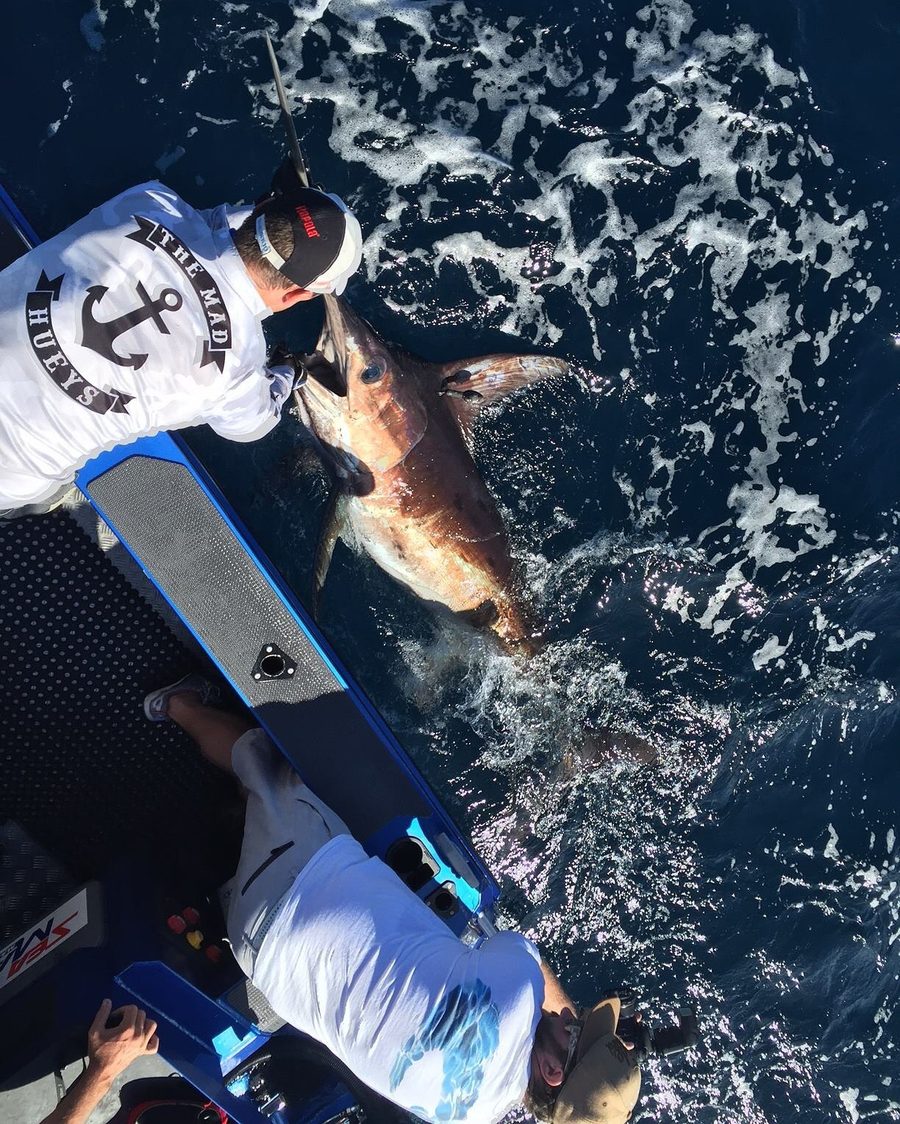
Tagging a swordfish alongside a recreational fishing boat.
Monthly positions of the tagged swordfish.
- With
- Sean Tracey and colleagues, IMAS
- Outputs
- Tracey et al. 2023a, 2023b; Willis et al. 2026
Collaboration
Swordfish movement and recreational fishing
Electronic tags on swordfish caught by recreational anglers in temperate Australian waters have shown how these fish move between the temperate and tropical southwest Pacific, how well they survive release, and how they use the thermocline during a fight.
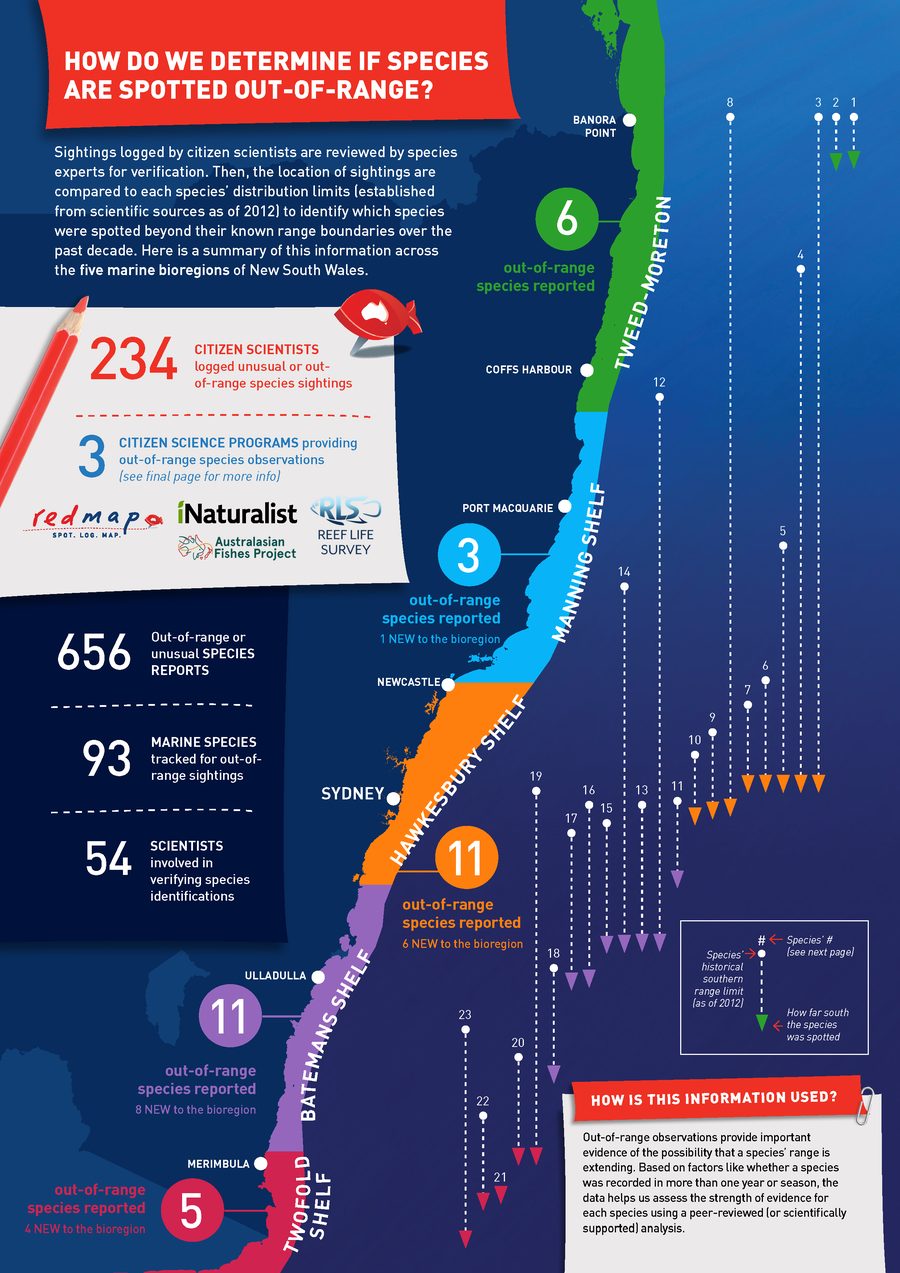
A page from the Redmap New South Wales report card.
- Website
- redmap.org.au
- Output
- Wolfe et al. 2025, Diversity and Distributions
Ongoing
Redmap Australia
Redmap invites fishers, divers and beachgoers to log marine species they see outside their usual range, and each record is checked by a scientist. Barrett coordinates Redmap nationally, and the lab uses these records alongside other citizen science data to track climate-driven range extensions.
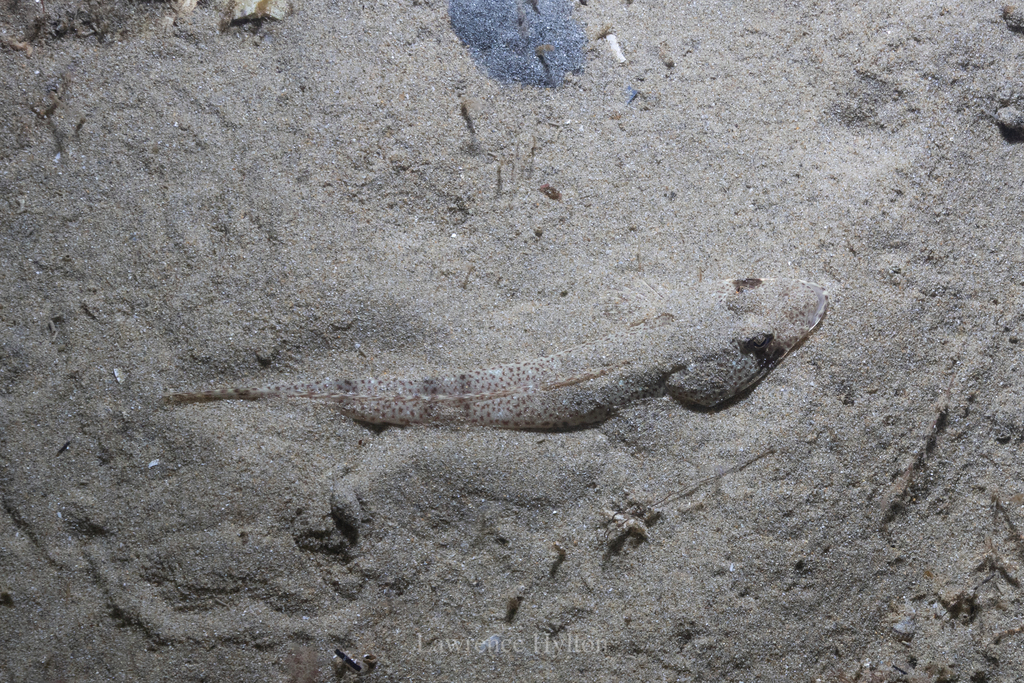
Placeholder photo: Lawrence Hylton, CC BY 4.0, via iNaturalist
- Funding
- FRDC 2020-005, led by Sean Tracey
- Output
- Goodrich et al. 2026, Conservation Physiology
Collaboration
Sand flathead in Tasmania
Sand flathead are among Tasmania’s most popular recreational fish. We contributed to a cost-effective approach to monitoring and assessing the fishery, and to work showing how fish differ between heavily and lightly fished regions.
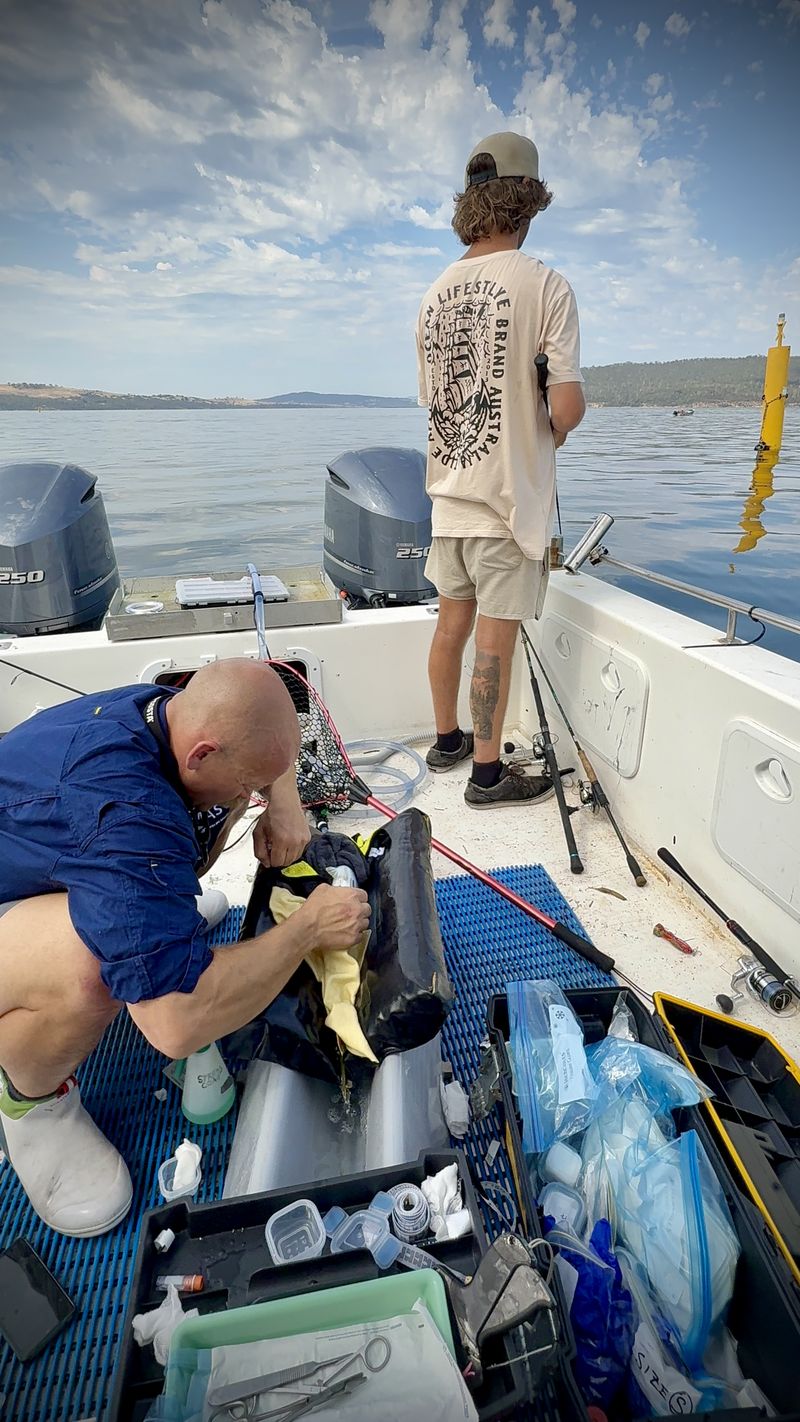
Tagging fish on the water in southeast Tasmania.
- Species of interest
- Bluethroat wrasse, sand flathead, southern rock lobster and juvenile snapper
In planning
Crayfish Point acoustic array
A small array of acoustic receivers off Crayfish Point, Taroona, would give students hands-on tracking work close to Hobart, and support fine-scale studies of reef fishes and southern rock lobster, including inside the adjacent reserve.
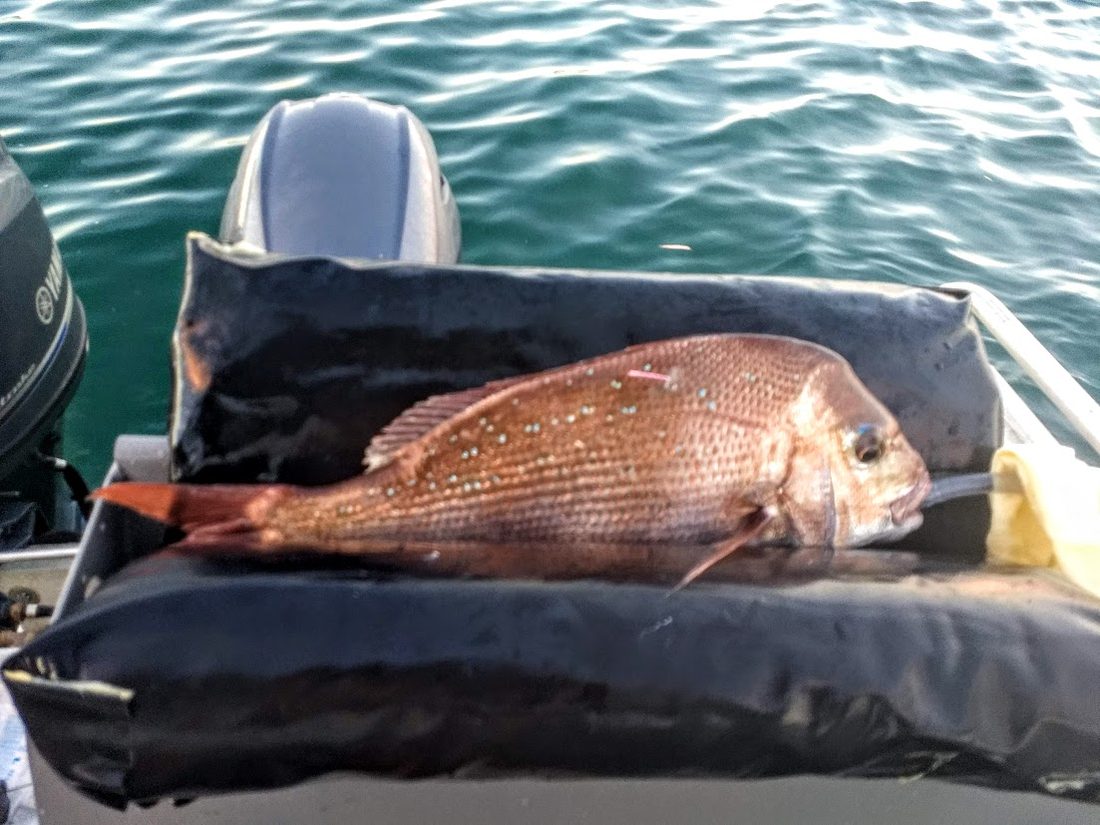
A snapper on the tagging cradle before release, southeast Tasmania.
- Outputs
- Wolfe et al. 2020, Conservation Physiology; PhD thesis, University of Tasmania, 2021
PhD · 2021
Snapper at their southern range edge
Snapper (Chrysophrys auratus) have become established in southeast Tasmania, south of their historical range. Barrett’s PhD combined field work with laboratory trials to test how winter temperatures and behaviour shape where they can persist.